|
| Home
| 3D Images
| AAL Activities
| Animations
| Astronomy Class
| Astronomy News
| Astrophotography Gallery
| |
|
Philips SPC900 NC web camera, unless otherwise indicated, with an IR blocking filter. 8 inch Meade LXD55 SCT and 3X barlow. Registax verions 3 or 4 were used for stacking. Final processing has been done using AstraImage for removing diagonal bands through Fast Fourier Transform edits and for applying deconvolution. Photoshop CS2 or Paint Shop Pro 9 have been used for adjusting levels, curves and color, while Neat Image is used for digital noise removal. K3CCDTools version 1 was used to record the videos unless otherwise indicated. Camera settings recorded with WcCrtl unless otherwise indicated. |
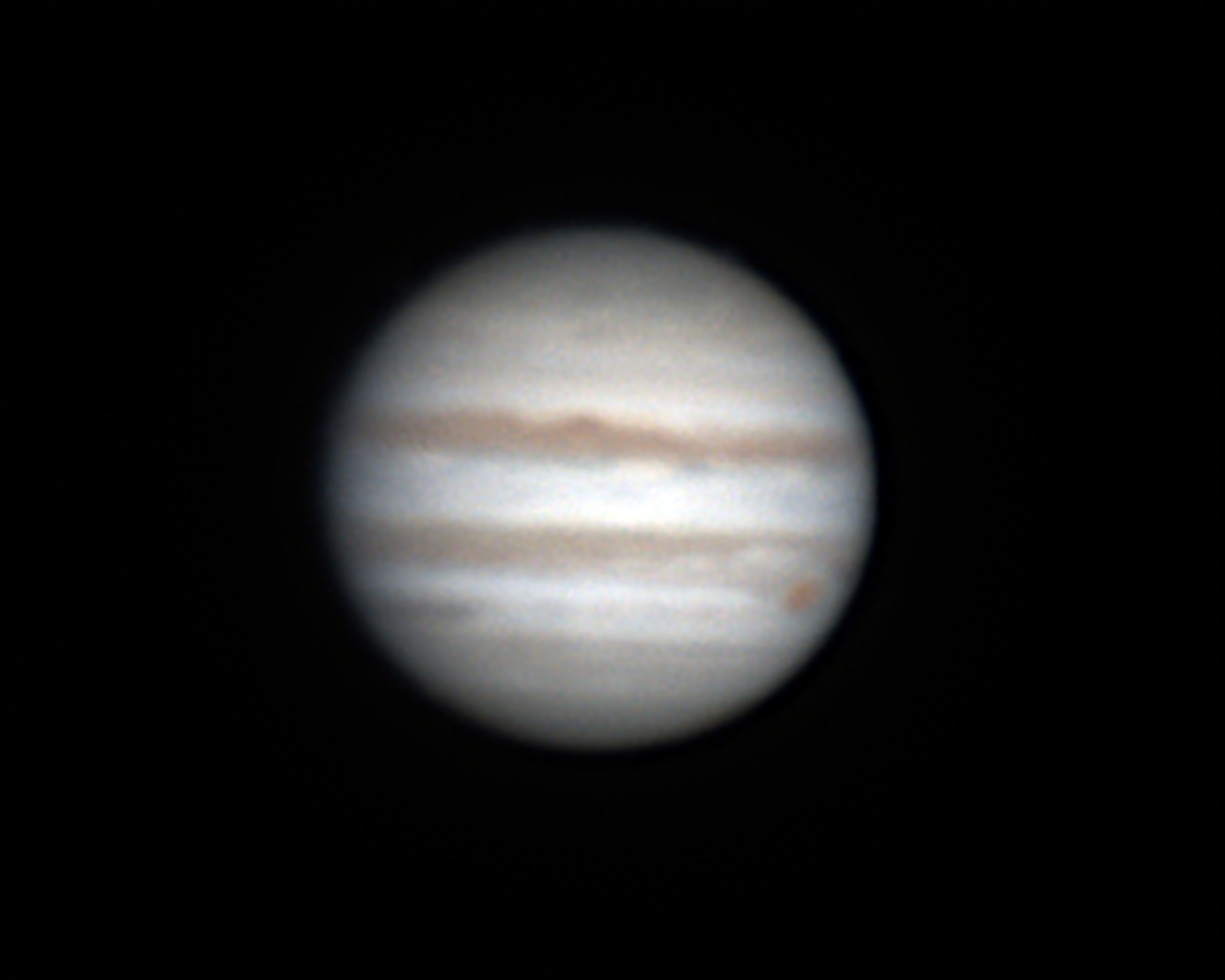
| November 27, 2009 at 0:09 UT The boring side of Jupiter. 1/33 second exposure. Brightness: 50%. Gamma 0%. Saturation 100%. Gain: 43%. 400 frames stacked. Seeing varied from poor to good (~2 to 4 out of 5). Angular diameter 38.1". |
![]() Larger Image |
| November 21, 2009 Double transits of the shadow of Io and the moon Ganymede. Io is visible to the right. Io's shadow is the smaller of the two spots on Jupiter's disk. In the last frame you can see the Great Red Spot begining to come into view. 1/33 second exposure. Brightness: 50%. Gamma 0%. Saturation 50%. Gain: 46%. Seeing was poor to average (~2 to 3 out of 5). Angular diameter 38.8". |
||
![]() Larger Image |
| 0:06 UT 325 frames stacked |
0:21 UT 300 frames stacked |
0:45 UT 250 frames stacked |
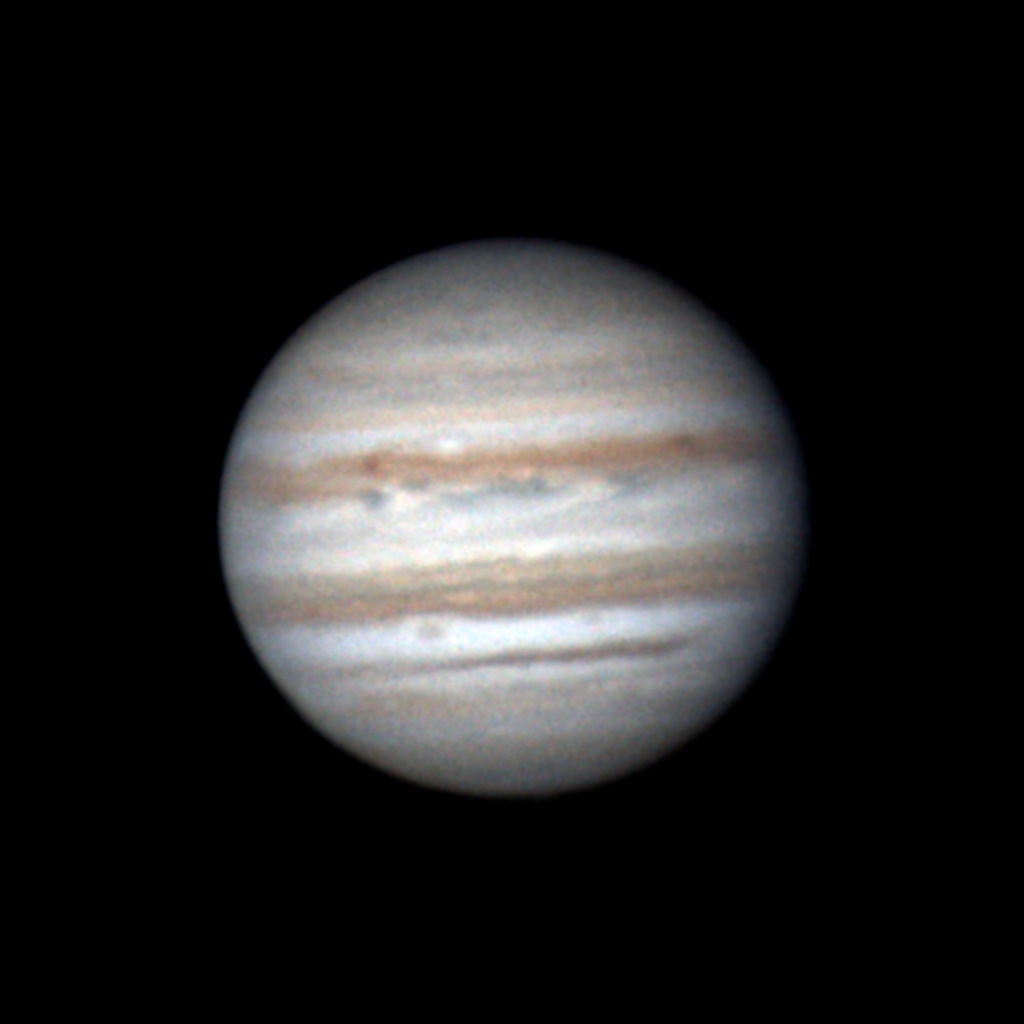
| November 20, 2009 at 0:36 UT The boring side of Jupiter. 1/25 second exposure. Brightness: 50%. Gamma 0%. Saturation 100%. Gain: 37%. 350 frames stacked. Seeing was poor to average (~2 to 3 out of 5). Angular diameter 38.9". |
![]() Larger Image |
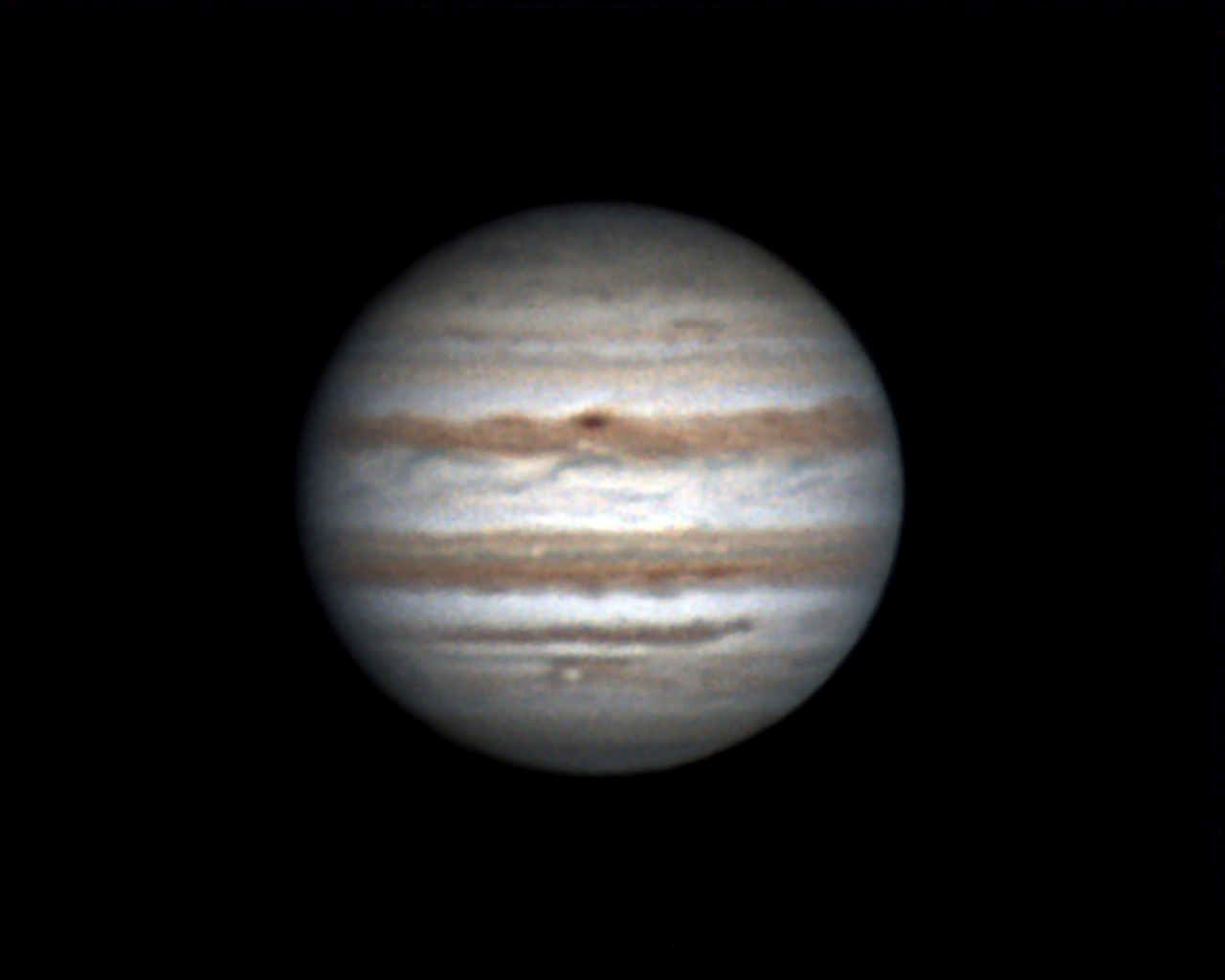
| November 5, 2009 at 0:34 UT The Great Red Spot, Io and its shadow. 1/33 second exposure. Brightness: 50%. Gamma 0%. Saturation 100%. Gain: 43%. 300 frames stacked. Seeing was good (~4 out of 5). Angular diameter 40.8". |
![]() Larger Image |
| October 18, 2009 at 0:48 UT The boring side of Jupiter. 1/33 second exposure. Brightness: 50%. Gamma 0%. Saturation 100%. Gain: 48%. 300 frames stacked. Seeing was poor (~2 out of 5). Angular diameter 43.2". |
![]() Larger Image |
| October 10, 2009 at 1:22 UT The boring side of Jupiter. 1/33 second exposure. Brightness: 50%. Gamma 0%. Saturation 50%. Gain: 43%. 400 frames stacked. Seeing was average (3 out of 5). Angular diameter 44.3". |
![]() Larger Image |
| September 30, 2009 The boring side of Jupiter. 1/33 second exposure. Brightness: 50%. Gamma 0%. Saturation 100%. Gain: 43%. Seeing was good to excellent (between a 4 to 5 out of 5). Angular diameter 45.6". |
||
![]() Larger Image |
| 2:00 UT 425 frames stacked |
2:23 UT 450 frames stacked |
2:45 UT 400 frames stacked |
| September 27, 2009 The Great Red Spot and the transit of Io and its shadow. 1/33 second exposure. Brightness: 50%. Gamma 0%. Saturation 100%. Gain: 41%. Seeing was good (~4 out of 5). Angular diameter 45.9". |
||
![]() Larger Image |
| 2:06 UT 400 frames stacked |
2:46 UT 400 frames stacked |
3:24 UT 400 frames stacked |
| September 21, 2009 The boring side of Jupiter. In the first frame Europa and its shadow can be seen. 1/33 second exposure. Brightness: 50%. Gamma 0%. Saturation 100%. Gain: 52%. Seeing was average (~3 out of 5). Angular diameter 46.6". |
|
![]() Larger Image |
| 1:58 UT 300 frames stacked |
2:13 UT 300 frames stacked |
| September 7, 2009 at 4:04 UT The Great Red Spot. 1/33 second exposure. Brightness: 50%. Gamma 0%. Saturation 100%. Gain: 54%. 500 frames stacked. Seeing was good to excelent(between a 4 to 5 out of 5). Angular diameter 48.0". |
![]() Larger Image |
| September 6, 2009 at 4:26 UT The boring side of Jupiter. 1/33 second exposure. Brightness: 50%. Gamma 0%. Saturation 100%. Gain: 54%. 350 frames stacked. Seeing was good (~4 out of 5). Angular diameter 48.0". |
![]() Larger Image |
| August 30, 2009 at 3:42 UT The boring side of Jupiter. 1/33 second exposure. Brightness: 100%. Gamma 0%. Saturation 50%. 450 frames stacked. Seeing was poor (~2 out of 5). Angular diameter 48.5". |
![]() Larger Image |
| August 24, 2009 Jupiter with the impact scar. The impact scar has faded a lot and appears as two faint bands. 1/33 second exposure. Brightness: 50%. Gain: 41%. Gamma 0%. Saturation 100%. Seeing was average (~3 out of 5). Angular diameter 48.7". |
|||
![]() Larger Image |
| 3:51 UT 350 frames stacked |
4:18 UT 300 frames stacked |
4:40 UT 300 frames stacked |
5:25 UT 300 frames stacked |
| August 23, 2009 at 5:04 UT Infrared image of Jupiter. For this image I used an Astronomik Planet Pro 742 IR filter and ImagingSource DBK camera. 1/5 second exposure. Brightness: 100%. Gamma 0%. Saturation 50%. 275 frames stacked. Seeing was average to good (~3 to 4 out of 5). Angular diameter 48.7". |
![]() Larger Image |
| August 23, 2009 at 4:22 UT The boring side of Jupiter. 1/33 second exposure. Brightness: 50%. Gain: 43%. Gamma 0%. Saturation 100%. 450 frames stacked. Seeing was average to good (~3 to 4 out of 5). Angular diameter 48.7". |
![]() Larger Image |
| August 13, 2009 at 6:17 UT The boring side of Jupiter. 1/33 second exposure. Brightness: 50%. Gain: 46%. Gamma 0%. Saturation 50%. 200 frames stacked. Seeing was poor (~2 out of 5). Angular diameter 48.9". |
![]() Larger Image |
| August 12, 2009 Jupiter with the impact scar. The impact scar appears to have broken into several pieces. 1/33 second exposure. Brightness: 50%. Gain: 48%. Gamma 0%. Saturation 100%. Seeing was average (~3 out of 5). Angular diameter 48.9". |
||
![]() Larger Image |
| 5:04 UT 300 frames stacked |
5:29 UT 350 frames stacked |
5:57 UT 350 frames stacked |
| August 2, 2009 Jupiter with the impact scar, Europa, Europa's shadow, and Ganymede. Later, Io slips in behind Jupiter and is eclipsed by Jupiter's shadow. 1/33 second exposure. Brightness: 50%. Gain: 43%. Gamma 0%. Saturation 50%. Seeing was good to nearly excellent (~4 or better out of 5). Angular diameter 48.6". |
||
![]() Larger Image |
| 5:52 UT 450 frames stacked |
6:47 UT 400 frames stacked |
7:31 UT 400 frames stacked |
![]() Larger Image |
| 7:37 UT 400 frames stacked |
7:43 UT 350 frames stacked |
8:07 UT 400 frames stacked |
| July 31, 2009 at 6:23 UT Jupiter with the impact scar. 1/33 second exposure. 475 frames stacked. Brightness: 50%. Gain: 43%. Gamma 0%. Saturation 100%. Seeing was fair to good(~3 to 4 of 5). Angular diameter 48.5". |
![]() Larger Image |
| July 26, 2009 Jupiter with the impact scar that was discovered by Australian amateur Anthony Wesley. Europa is the moon visible on the right side of the image. I had a lot of trouble with thin clouds which made it difficult to get proper exposures but the images turned out better than expected. 1/33 second exposure. Brightness: 50%. Gain: 46%. Gamma 0%. Saturation 100%. Seeing was fair to good(~3 to 4 out of 5). Angular diameter 48.2". |
||
![]() Larger Image |
| 7:04 UT 350 frames stacked |
7:21 UT 350 frames stacked |
7:46 UT 400 frames stacked |
July 18, 2009 Zip file with all 27 images from July 18th.Jupiter's Great Red Spot, Io and its shadow. Normally, I am unable to resolve Io when it transits in front of Jupiter due to the seeing conditions but on this night the conditions allowed me to resolve Io very clearly. 1/33 second exposure. Brightness: 50%. Gain: 41%. Gamma 0%. Saturation 100%. Seeing was excellent(~4 to 5 out of 5). Angular diameter 47.6". |
||
![]() Larger Image |
| 7:59 UT 250 frames stacked |
8:47 UT 300 frames stacked |
9:02 UT 300 frames stacked |
| July 8, 2009 Jupiter's Great Red Spot and Europa and its shadow. 1/33 second exposure. Brightness: 50%. Gain: 46%. Gamma 0%. Saturation 100%. Seeing was fair(~3 of 5). Angular diameter 46.6". |
||
![]() Larger Image |
| 8:38 UT 350 frames stacked |
9:00 UT 400 frames stacked |
9:15 UT 400 frames stacked |
| July 6, 2009 at 7:54 UT Jupiter's Great Red Spot. 1/33 second exposure. Brightness: 50%. Gain: 46% to 57% (transparency was very variable). Gamma 0%. Saturation 100%. 550 frames stacked. Seeing was very good to excellent (~4 to 5 out of 5). Angular diameter 46.3". |
![]() Larger Image |
| July 1, 2009 at 8:12 and 8:31 UT The Great Red Spot and Europa with its shadow in transit. Europa is the faint round spot in the equatorial belt above the Great Red Spot. 1/33 second exposure. Brightness: 50%. Gain: ~50%. Gamma 0%. Saturation 100%. 90 frames stacked. Seeing was poor with brief moments of good (~2 to 4 out of 5). Angular diameter 45.8". |
||
![]() Larger Image |
![]() Annotated Version |
| June 27, 2009 at 8:42 UT Ganymede is visible to the right of Jupiter. 1/33 second exposure. Brightness: 50%. Gain: 46%. Gamma 0%. Saturation 50%. 400 frames stacked. Seeing was fair to good (~3 to 4 out of 5). Angular diameter 45.3". |
![]() Larger Image |
| June 24, 2009 at 9:06 UT Imaging Source DBK color camera. The Great Red Spot is visible to the lower right of Jupiter and Europa and Io are visible to the right (Europa is the moon on the left). 1/30 second exposure. Brightness: 100%. Gamma 0%. Saturation 50%. 500 frames stacked. Seeing was fair to good (~3 to 4 out of 5). Angular diameter 44.9". |
![]() Larger Image |
| June 23, 2009 at 8:33 UT 1/25 second exposure. Brightness: 50%. Gain: 25%. Gamma 0%. Saturation 50%. 375 frames stacked. Seeing was poor fair (~2 to 3 out of 5). Angular diameter 44.7". |
![]() Larger Image |
| May 29, 2009 at 10:06 UT 1/33 second exposure. Brightness: 50%. Gain: 52%. Gamma 0%. Saturation 100%. 400 frames stacked. Seeing was fair (~3 out of 5). Angular diameter 41.4". |
![]() Larger Image |
| May 24, 2009 at 10:35 UT 1/25 second exposure. Brightness: 50%. Gain: 27%. Gamma 0%. Saturation 50%. 550 frames stacked. Io is visible to the left and Io's shadow is seen in transit across the disk. Seeing was excellent (almost a 5 out of 5). Angular diameter 40.7". |
![]() Larger Image |
|
| Home
| 3D Images
| AAL Activities
| Animations
| Astronomy Class
| Astronomy News
| Astrophotography Gallery
| |